LAND ROVER TOR000010 Coupling Viscous Transmission Freelander
fits year: 1997–2006.
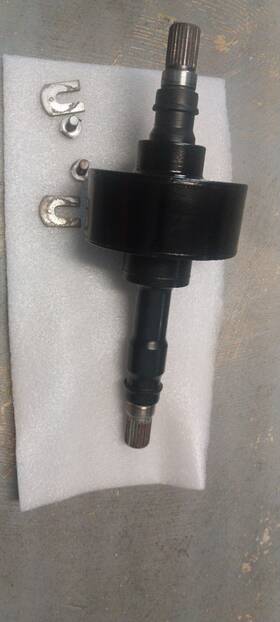
( Brand: Land Rover ), ( Manufacturer Part Number: TOR000010 ), ( Part Type: Transmission )
Review LAND ROVER Coupling viscous Transmission Freelander fits 1997–2006
The **Land Rover Freelander (TOR000010) Viscous Transmission Coupling (1997 2006)** is a critical yet often overlooked component that plays a pivotal role in the seamless operation of the vehicle s automatic transmission system. Designed specifically for the Freelander s 4WD and 2WD models equipped with the ZF 5HP19 or 5HP24 automatic transmission, this viscous coupling serves as the intermediary between the engine s torque converter and the transmission input shaft, ensuring smooth power transfer while mitigating harsh shifts and torsional vibrations. Crafted from high-performance materials, including a durable rubber-like viscous fluid housed within a precision-engineered metal housing, the coupling operates by converting hydraulic pressure into mechanical force, allowing the transmission to engage progressively rather than abruptly. This design not only enhances driving comfort by reducing jerkiness during gear changes but also protects the transmission from excessive wear by absorbing minor fluctuations in engine torque. Over time, however, the viscous fluid within the coupling can degrade due to heat, contamination, or prolonged use, leading to sluggish engagement, delayed shifting, or even complete failure symptoms that can severely compromise the Freelander s off-road capability and overall drivability. Replacing this component with an OEM-specification or high-quality aftermarket alternative restores the transmission s responsiveness, extends the lifespan of the torque converter and clutch pack, and ensures reliable performance whether navigating urban traffic or tackling rugged terrain. Ideal for mechanics and enthusiasts seeking to maintain or upgrade their Freelander s transmission system, this coupling exemplifies Land Rover s engineering precision while underscoring the importance of regular maintenance in preserving the vehicle s legendary durability.
### **Pros and Cons of Buying a Land Rover Freelander (TOR000010 Coupling/Viscous Transmission, 1997 2006)**
#### **Pros:**1. **Off-Road Capability** The Freelander was designed for adventure, featuring a robust chassis, high ground clearance, and all-wheel-drive options. It performs well on rough terrain, making it suitable for light off-roading, rural driving, and uneven roads.
2. **Spacious Interior** The Freelander offers a relatively large cabin for its class, with practical seating for five (though rear legroom is limited). The interior materials are durable, and the layout is functional for daily use.
3. **Viscous Coupling (TOR000010)** This system provides a smooth transition between two-wheel and four-wheel drive, reducing wear on drivetrain components compared to traditional locking differentials. It s particularly useful in wet or slippery conditions.
4. **Reliability (with Proper Maintenance)** When well-maintained, the Freelander s mechanical components (engine, transmission, suspension) can last for hundreds of thousands of miles. The 2.2L TD4 diesel (common in this era) is known for durability if serviced regularly.
5. **Classic Land Rover Appeal** The Freelander has a timeless, rugged aesthetic that appeals to enthusiasts who prefer a traditional SUV over modern, tech-heavy alternatives. It s also a good choice for those who value a no-frills, practical vehicle.
6. **Good Resale Value (for Classics)** While not as high as newer Land Rovers, well-documented Freelanders with low mileage retain decent resale value, especially in the classic SUV market.
7. **Simple Mechanics** Compared to modern SUVs, the Freelander s drivetrain and suspension are relatively straightforward, making repairs and modifications easier for those with mechanical skills.
8. **Fuel Efficiency (for Diesel Models)** The 2.2L TD4 diesel offers better fuel economy than gasoline engines of the same era, making it cost-effective for long-distance driving.
---
#### **Cons:**1. **Poor Fuel Economy (Gasoline Models)** The 2.4L gasoline engines (especially the K-series) are thirsty, with real-world MPG often below 15 18 MPG. This can add up to significant fuel costs over time.
2. **Rust Issues** Many Freelanders (especially those from the late 1990s to early 2000s) suffer from rust, particularly in the wheel arches, sills, and undercarriage. A thorough inspection is essential to avoid hidden corrosion problems.
3. **Viscous Coupling Reliability** While the TOR000010 coupling is smooth, it can fail over time, leading to drivetrain issues. Some owners report leaks or complete failure, which can be costly to replace.
4. **Outdated Safety Features** Modern safety standards (e.g., electronic stability control, advanced airbag systems) were not present in the early Freelander. Crash safety is inferior to contemporary SUVs.
5. **Comfort on Paved Roads** The Freelander s suspension is firm and designed for off-road use, which can make highway driving uncomfortable. Road noise and vibration are noticeable compared to modern SUVs.
6. **Electrical Gremlins** Early Freelanders (especially pre-2003) are notorious for electrical issues, including faulty wiring, intermittent problems with lights, and dashboard malfunctions. A full electrical system check is recommended.
7. **Transmission Wear** The automatic transmission (especially in gasoline models) can wear out prematurely if not maintained properly. Some owners report rough shifting or failure around 100,000 150,000 miles.
8. **Limited Modern Tech** No Bluetooth, minimal infotainment, and basic climate control make the Freelander feel outdated compared to today s SUVs. Aftermarket upgrades may be needed for convenience.
9. **Parts Availability** While still available, some components (especially for older models) can be harder to source than in newer vehicles. Prices for OEM parts may be higher than for mass-market SUVs.
10. **Higher Maintenance Costs** Due to its complexity (viscous coupling, AWD system, suspension components), servicing a Freelander can be more expensive than a simpler modern SUV.
11. **Rear Seat Comfort** The rear seats are narrow and lack legroom, making long trips uncomfortable for adults. The Freelander is best suited for short trips or as a secondary vehicle.
12. **Emissions and Legal Restrictions** Older diesel models (especially pre-2005) may struggle with modern emissions regulations in some regions, potentially limiting where the vehicle can be driven.
---
### **Ending Conclusion:**The **Land Rover Freelander (1997 2006, viscous coupling)** is a capable off-road SUV with a loyal following among enthusiasts who prioritize ruggedness, simplicity, and classic Land Rover charm. It remains a practical choice for those who need a reliable, no-nonsense vehicle for rural or adventurous driving, provided they are prepared for higher maintenance costs and potential rust issues.
However, for **daily urban driving, long commutes, or those seeking modern comforts and safety**, the Freelander s shortcomings (fuel efficiency, comfort, electrical quirks, and outdated tech) make it less ideal. It is best suited for **weekend adventurers, second vehicles, or collectors** rather than primary daily drivers.
---
### **Recommendation:** **Buy if:**- You prioritize **off-road capability** and a **classic Land Rover experience**.
- You are **mechanically inclined** or have access to a trusted mechanic for maintenance.
- You find a **well-documented example** with **low mileage, no rust, and a serviced viscous coupling**.
- You are okay with **higher fuel costs, firmer ride comfort, and limited modern features**.
- You plan to **use it sparingly** (e.g., weekends, rural trips) rather than daily.
**Avoid if:**- You need a **comfortable, fuel-efficient, or low-maintenance** vehicle for daily use.
- You cannot afford **potential rust repairs, transmission issues, or electrical problems**.
- You require **modern safety features, advanced tech, or a smooth highway ride**.
- You live in an area with **strict emissions regulations** that may restrict older diesel models.
**Best Approach:**- **Inspect thoroughly** for rust, electrical issues, and transmission health.
- **Check service history** A Freelander with regular maintenance will last much longer.
- **Test drive on and off-road** to ensure it meets your needs.
- **Budget for maintenance** Expect to spend more on repairs than with a modern SUV.
For most **primary daily drivers**, a **used modern SUV (e.g., Toyota RAV4, Subaru Outback, or even a newer Land Rover Discovery)** would be a better long-term investment. However, for the right buyer, the Freelander remains a **fun, capable, and characterful** choice.
Details:
Couplet-viscous no bearings good condition comes with bolts couplet-viscous.
part #: tor000010 prices
- $896.89-$1378.29
specifications torquconv:
- for years: 1997-2006
- brand: Land Rover
- mpn: Tor000010
- part type: Transmission
shipping torquconv:
- transit: 4-10 Days
- class: Standard
- carrier: USPS
- cost: $14.58
- service: USPS Ground Advantage
- type: Calculated
general torquconv:
- Car Truck Parts Accessories > Transmission Drivetrain > Torque Converters
- condition: Used
seller torquconv:
- rating: 0.0%
- city: Richmond, Virginia
- # reviews: 0
offer torquconv:
- options: Ship-to-home
- started: March 15, 2026
- quantity: 1
- sold: 0
- availability: In Stock
returns torquconv:
- policy: No Returns
payments torquconv:
- other
- credit card: Visa
- wallet: Apple-pay
Land Rover TOR000010 Is Similar To:
- 092202 Land Rover Discovery Torque Converter (29.6% similar) It will show signs of wear such as scuffs and scratches. Any miscalculations upon re installation, electrical, motor issues, etc. Please review the pictures carefully and read condition area for specifics. O this is a used part. Might affect the performance of part. Box APO FPO...(October 15th, 2018)
- 555627 Land Rover V8 Torque (32.7% similar) 8 liter inline 6 cylinder rated at 168 BP and 280 ft lbs of torque. Fits with the stock bulkhead and drops in place. Will also fit a Land Rover discovery...(February 11th, 2018)
- 9999999 Land Rover V8 Torque (32.3% similar) Convert-your-diesel-to-veg-oil-WV-avo-CO W0QQUGIDZ Land Rover discovery I this sale is final, so be sure an examine the pictures. Fits with the stock bulkhead and drops in place. For sale is a used torque converter removed from range Rover classic or...(February 13th, 2018)
- Ftc4607 Land Rover Genuine Flex (35.3% similar) Will fit P38 range Rover discovery 2 free shipping. Genuine Land Rover flex plate for bosch 6 v8 engines...(October 27th, 2017)
- Hrc2411-wyf15 Land Rover 4.6l Torque (29.9% similar) This is a used oem torque converter for Land Rover with engine part HRC2411 WYF15...(December 9th, 2017)
- Lr049905 Land Rover Auto Trans Torque Converter (39% similar) The box helps identify part and proves to manufacturer that core replaces one of their products. We rarely reject a core. Obviously, the core won't be working well or you wouldn't have replaced it but can't smashed, rusted solid, otherwise unusable. Superseded part numbers this item may have been ...(May 19th, 2018)
- Lr3 Land Rover 05 4.0l (32.3% similar) There may be normal signs of wear and tear present such as scratches, scuffs, dirt, etc. Were happy to do this check for you. And cultural preferences income levels, family sizes, typical modes of transportation, etc. Left hand drive vehicles all and parts are for made the us. The picture is actual ...(April 19th, 2017)
- Tgd000150 Land Rover 04 Range (32% similar) Made for us. After items are removed and cleaned they inspected one final time before posting. Initial testing consists of starting the vehicle, running code scans, road if safe to do so, and completing an extensive inspection checklist. 4l v8 auto trans transmission torque converter item has been ...(April 17th, 2017)
- Land Rover Lr018571 06-12 Range Sport Transmission Torque Converter Oem (52.1% similar) Useful links. Our team will do our best to solve any issue. Condition: normal wear for its age - please see pictures. Daytime phone number is required load will not deliver until appointment scheduled. 30 day replacement warranty standard no-hassle 30-DAY warranty on all parts. Five stars all the ...(January 6th, 2024)
- Land Rover Lr018570 2010-2013 Range Transmission Torque Converter Oem (55.7% similar) Important message regarding compatibility: some of our listings use compatibility feature at the top page. Daytime phone number is required load will not deliver until appointment scheduled. Load is curbside delivery only. 30 day replacement warranty standard no-hassle 30-DAY warranty on all parts. ...(February 4th, 2024)
- Land Rover 206700 06-09 Range Sport S c A t Transmission Torque Converter Oem 041 (47.4% similar) Also, most part numbers must match in order to fit your vehicle. Lot # 041823. Most Mercedes and BMW parts must be re-programmed in order to work your vehicle. 2008 Land Rover range sport sc 4.2. Mileage: 99,354...(February 12th, 2024)